
ANA Titer: What Your Result (1:40, 1:80, 1:160) Means

Sample type: Serum

Other names: antinuclear antibody titer, antinuclear antibodies titer, ANA titre, ANA by IFA, ANA by IIF, ANA HEp-2, FANA, fluorescent antinuclear antibody, ANA screen with reflex titer, anti-nuclear ab, ANA quant, ANA quantitative titer

less than 1:40 -- Negative

No significant antinuclear antibodies detected — the expected, reassuring result. Because the ANA test is highly sensitive for lupus, a negative result is particularly useful for helping rule out systemic lupus erythematosus. Still interpreted alongside your symptoms and medical history.

1:40 to 1:80 -- Low Antibody Level

A low positive — and the most common ANA result of all. Titers in this range are found in a large share of completely healthy people (roughly a quarter to a third of healthy adults at 1:40, about 1 in 10 at 1:80). On its own, a low antibody level usually does not indicate disease and does not diagnose lupus or any autoimmune condition. It's read together with your symptoms, the staining pattern, and more specific antibody tests.

>1:80 -- Elevated Antibody Level

Antibodies were still detectable beyond the 1:80 dilution (1:160 or higher). This is more likely to be clinically relevant — especially alongside symptoms such as joint pain, rashes, fatigue, or dry eyes and mouth — and usually prompts more specific follow-up testing (anti-dsDNA, anti-Sm, anti-SSA/SSB, and others). Important context: this is not an emergency, the titer height does not indicate how severe any condition is, and many people with an elevated ANA never develop an autoimmune disease. Interpreted with the staining pattern, your symptoms, and confirmatory tests.

If you're here because you just got a positive result: a positive ANA is a screening result, not a diagnosis. It's common in healthy people — and at low titers especially, it often means nothing on its own. What follows explains exactly what your number and pattern do and don't mean.

What is an ANA titer?

ANA stands for antinuclear antibodies — proteins your immune system makes that, instead of targeting infections, mistakenly target structures inside your own cells, specifically the cell nucleus. Most people have small amounts of these antibodies normally. When they're present in larger amounts, it can be a sign that the immune system is attacking the body's own tissues, as happens in autoimmune disease.

The titer tells you how much antibody is present. The lab dilutes your blood sample in doubling steps — 1:40, 1:80, 1:160, 1:320, and so on — and looks for the highest dilution at which the antibodies are still detectable. That last positive dilution is your titer. A result of 1:320 means antibodies were still visible after the sample was diluted 320-fold; a higher number means more antibody.

Negative vs. positive — and why "positive" isn't a diagnosis

A negative ANA means no antinuclear antibodies were detected (most labs use a cutoff below 1:40). A positive ANA means they were found — but on its own this does not mean you have an autoimmune disease. Many healthy people, particularly women and older adults, have a positive ANA, especially at low titers. The result only becomes meaningful when read together with your symptoms, medical history, and more specific antibody tests.

This matters because the ANA test is very sensitive but not very specific. Nearly everyone with systemic lupus erythematosus (SLE) is ANA-positive — which makes a negative result useful for ruling lupus out — but a positive result has many possible explanations, including other autoimmune diseases, thyroid disease, infections, certain medications, and simply being healthy.

What your titer means

The clinical weight of a positive ANA rises with the titer. As a quick guide: 1:40 and 1:80 are low titers seen often in healthy people; 1:160 is moderate and more likely to be relevant; 1:320 and above raise meaningful suspicion of an autoimmune process, particularly alongside symptoms. A detailed breakdown of what each result range means appears further down this page. Importantly, a higher titer does not mean a more severe disease — ANA titer doesn't reliably track disease activity the way some other antibodies (like anti-dsDNA in lupus) can.

What the staining pattern means

Alongside the titer, the lab reports a pattern — how the antibodies light up the cell nucleus under the microscope. The pattern points toward which specific antibodies may be present and helps guide follow-up testing. It is suggestive, not diagnostic.

  • Homogeneous (diffuse): even staining across the nucleus. Associated with antibodies to dsDNA and histones — seen in SLE and drug-induced lupus.
  • Speckled: scattered dots across the nucleus, the most common pattern. Associated with anti-SSA/Ro, anti-SSB/La, anti-Sm, anti-RNP — seen in SLE, Sjögren's syndrome, and mixed connective tissue disease. It's also the least specific and occurs in healthy people.
  • Nucleolar: staining concentrated in the nucleoli. Associated with systemic sclerosis (scleroderma) and myositis overlap.
  • Centromere (discrete speckled): distinct dots that correspond to chromosome centromeres. Associated with limited cutaneous systemic sclerosis (the CREST variant).
  • Cytoplasmic / other: staining outside the nucleus — investigated separately (e.g. anti-mitochondrial, anti-Jo-1).

Why the test is ordered

Doctors order an ANA test when there are signs that could point to an autoimmune disease — for example fatigue, joint pain or swelling, skin rashes, unexplained fevers, or dry eyes and mouth. A positive result is typically followed by a reflex panel of more specific tests (anti-dsDNA, anti-Sm, anti-RNP, anti-SSA/SSB, anti-Scl-70, anti-centromere, anti-Jo-1) to narrow down the cause. Conditions linked to a positive ANA include lupus, Sjögren's syndrome, scleroderma, mixed connective tissue disease, autoimmune hepatitis, and autoimmune thyroid disease.

Key takeaways

  • The ANA titer measures how much antinuclear antibody is in your blood; a higher dilution number means more antibody.
  • Low titers (1:40, 1:80) are common in healthy people; ≥1:160 is more likely to be clinically meaningful.
  • A positive ANA is a screen, not a diagnosis — it must be interpreted with your symptoms and follow-up tests.
  • Titer height does not equal disease severity.
  • Track your ANA titer over time and alongside your related antibodies and inflammatory markers — patterns across results, not a single number, tell the real story.

Lifestyle recommendations

An ANA titer is a diagnostic marker, not a number you change through lifestyle — there is no diet, supplement, or exercise routine that "lowers ANA," and you should be cautious of any source claiming otherwise. The constructive actions are practical: if your titer is positive, note any symptoms (joint pain, rashes, fatigue, dry eyes or mouth, prolonged sun sensitivity) and their timeline to share with your doctor, keep a record of repeat ANA results and any reflex antibody tests so trends are visible, and follow specialist (rheumatology) guidance if you're referred. If you have a diagnosed autoimmune condition, general measures that support overall autoimmune health — not smoking, sun protection where relevant, managing stress and sleep, and staying current with recommended monitoring — are worth discussing with your clinician.

ANA titer
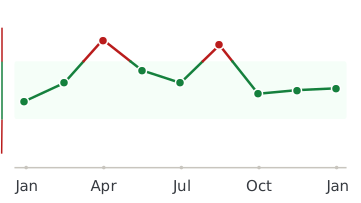
Healthmatters dashboard showing biomarker trend graph

Every lab result you’ve ever had, charted and explained.

Healthmatters is a tracker for your lab results. Upload a report from any lab, any country — every marker charted and explained.

Start with my report →
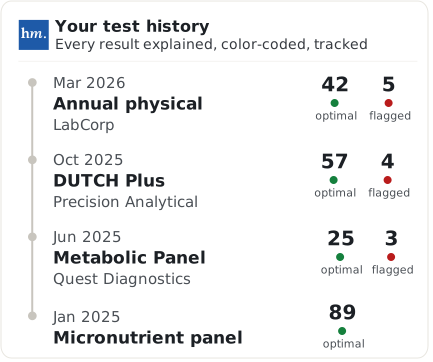
Beyond ANA titer — 10,000+ markers explained
One ANA titer result tells you where you are. Your history tells you where you’re heading. Upload your past lab reports and see this marker — and every marker on them —every marker charted against your own lab’s ranges.
Start with this report →
Healthmatters timeline preview showing biomarker trends over time

Frequently Asked Questions

What does an ANA titer of 1:80 mean?
1:80 is a low positive titer. It's found in roughly 1 in 10 healthy people and on its own usually does not indicate an autoimmune disease. Its meaning depends on the staining pattern, your symptoms, and follow-up antibody tests.
What does an ANA titer of 1:40 mean?
1:40 is the lowest reported positive titer and is very common in healthy adults — found in roughly a quarter to a third of healthy people. By itself it is usually not clinically significant and is interpreted alongside symptoms and history.
What does an ANA titer of 1:160 mean?
1:160 is a moderate titer that is more likely to be clinically relevant than 1:40 or 1:80, especially if you have symptoms such as joint pain, rashes, fatigue, or dry eyes and mouth. It typically prompts more specific follow-up testing.
Is an ANA titer of 1:320 high?
Yes — 1:320 is considered a high titer and meaningfully raises suspicion of an autoimmune process, particularly with symptoms. It is not a medical emergency, and a high titer does not indicate how severe any disease is; it signals the need for confirmatory testing.
What does an ANA titer of 1:1280 mean?
1:1280 is a strong positive, meaning antibodies were still detectable at a very high dilution. It increases the likelihood of an autoimmune condition, especially with symptoms, but still requires specific antibody tests to identify the cause. Titer height does not measure disease severity.
Can you have lupus with an ANA titer of 1:80?
It's possible but uncommon for lupus to present at only 1:80, since most people with lupus have higher titers. A 1:80 result is far more often seen in healthy people. Lupus is diagnosed using clinical criteria plus specific antibodies (such as anti-dsDNA and anti-Sm), not the ANA titer alone.
What is a normal ANA titer?
Most labs report below 1:40 as negative. Low titers of 1:40 and 1:80 are still considered "normal" in the sense that they occur frequently in healthy people. There is no single number that defines disease — context is everything.
What does a speckled ANA pattern mean?
A speckled pattern shows scattered dots across the cell nucleus and is the most common — and least specific — pattern. It's associated with antibodies seen in lupus, Sjögren's syndrome, and mixed connective tissue disease, but also occurs in healthy people. It guides follow-up testing rather than confirming a diagnosis.
What does a homogeneous ANA pattern mean?
A homogeneous (diffuse) pattern is even staining across the nucleus, associated with antibodies to dsDNA and histones. It's linked to systemic lupus and drug-induced lupus, but the pattern alone is suggestive, not diagnostic — specific antibody tests are needed to confirm.
What does a nucleolar ANA pattern mean?
A nucleolar pattern shows staining concentrated in the nucleoli (structures inside the nucleus). It's most associated with systemic sclerosis (scleroderma) and some myositis overlap conditions. Like all patterns, it points toward which specific antibodies to test next rather than confirming a diagnosis.
What does a centromere ANA pattern mean?
A centromere pattern shows distinct dots matching the chromosome centromeres. It's strongly associated with limited cutaneous systemic sclerosis (the CREST variant). It's a relatively specific pattern, but a diagnosis still depends on symptoms and confirmatory antibody testing.
Is a positive ANA always serious?
No. A positive ANA is a screening result, not a diagnosis. Many healthy people — especially women and older adults — have a positive ANA, particularly at low titers, and never develop an autoimmune disease. It only becomes meaningful alongside symptoms and specific follow-up tests.
Does a higher ANA titer mean a worse disease?
No. A higher titer means more antibody was detected, which can raise suspicion of an autoimmune process — but ANA titer does not reliably track how active or severe a disease is. Other tests (like anti-dsDNA in lupus) are used to monitor activity.
What's the difference between ANA titer and ANA pattern?
The titer (e.g. 1:160) is how much antibody is present — the highest dilution at which it's still detectable. The pattern (e.g. speckled, homogeneous) describes how the antibodies stain the nucleus and points toward which specific antibodies may be involved. Labs report both.
Clinical Sources & References

All our content is backed by peer-reviewed studies, academic research, and trusted medical sources. We’re committed to accuracy and transparency — see our editorial policy for details.

  1. Range of antinuclear antibodies in "healthy" individuals
    Arthritis Rheum. · 1997 View source ↗
  2. 2019 European League Against Rheumatism/American College of Rheumatology Classification Criteria for Systemic Lupus Erythematosus
    Arthritis Rheumatol. · 2019 View source ↗
  3. Assessment of antinuclear antibodies (ANA): National recommendations on behalf of the Croatian society of medical biochemistry and laboratory medicine
    Biochem Med (Zagreb). · 2021 View source ↗
  4. The Antinuclear Antibody (ANA) Test
    National Resource Center on Lupus · 2025 View source ↗
  5. Patient education: Antinuclear antibodies (ANA) (Beyond the Basics)
    UpToDate · 2025 View source ↗
Article Review Log
Last reviewed May 18, 2026
Originally published May 18, 2026
Reviewed by HealthMatters Editorial Team
Written by Healthmatters Editorial Team
Healthmatters Lifetime Plan

Pay $250. Track your health forever

One payment. No renewals. Yours for life.

10,000+ biomarkers explained · trends over time

See other plans →
Secure checkout via Stripe · GDPR & HIPAA
We accept results from any lab
LabCorp Quest Diagnostics Genova Diagnostics DUTCH Test Doctor's Data Vibrant America ZRT Laboratory Cyrex Labs + any other lab

What members are saying

★★★★★ 10,000+ happy members
★★★★★

"Watching my numbers move over the years — instead of forgetting last time's results — completely changed how I manage my health."

Daniel
Member since 2022
★★★★★

"Living across several countries made keeping my lab results organized a real challenge. Healthmatters brought my results from the USA, Spain, and Germany together — 20 years of history, with long-term trends instead of scattered reports."

Ben
Member since 2021 · tracks across countries
★★★★★

"Standard lab ranges are too wide for how I practice — 'normal' isn't optimal. I set my own bands, so a client sees yellow before a marker goes officially out of range. That's the conversation I want to be having."

Dr. Alexandra
Functional medicine · 6 yrs on Pro