
Immunoglobulin D (IgD) is an antibody isotype that makes up about 1% of proteins in the plasma membranes of immature B-lymphocytes where it is usually coexpressed with another cell surface antibody called IgM.
Remains in the bloodstream to fight bacteria. Functions mainly as an antigen receptor on B cells that have not been exposed to antigens. It has been shown to activate basophils and mast cells to produce antimicrobial factors.
Immunoglobulin D, Quant, Serum
 Immunoglobulin D, Quant, Serum

Every lab result you’ve ever had, charted and explained.
Healthmatters is a tracker for your lab results. Upload a report from any lab, any country — every marker charted and explained.
Start with my report →Beyond Immunoglobulin D, Quant, Serum — 10,000+ markers explained
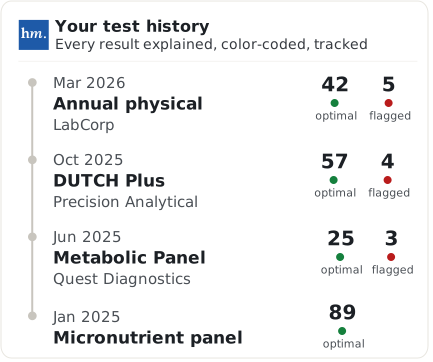
One Immunoglobulin D, Quant, Serum result tells you where you are. Your history tells you where you’re heading. Upload your past lab reports and see this marker — and every marker on them —every marker charted against your own lab’s ranges.
Start with this report →
Clinical Sources & References
All our content is backed by peer-reviewed studies, academic research, and trusted medical sources. We’re committed to accuracy and transparency — see our editorial policy for details.
Article Review Log
Written by
Healthmatters Editorial Team