
Rheumatoid Factor IgM: High Result & What It Means for RA

Sample type: Blood, Serum

Other names: RHEUMATOID FACTOR (IGM), RF IgM

Optimal result: 0 – 3.5 Units

An elevated Rheumatoid Factor IgM (RF-IgM) means your blood contains higher-than-normal levels of this autoantibody. RF-IgM is most commonly associated with rheumatoid arthritis (RA), but a positive result does not automatically mean you have RA — and a negative result does not rule it out.

RF-IgM levels are typically reported in IU/mL. Most laboratories consider values below 14–20 IU/mL as normal, though reference ranges vary by lab and method. Always use the reference interval printed on your report.

What elevated RF-IgM may indicate

The most common associations with elevated RF-IgM include:

  • Rheumatoid arthritis (RA) — present in approximately 70–80% of people with RA
  • Sjögren's syndrome
  • Systemic lupus erythematosus (SLE)
  • Mixed connective tissue disease
  • Chronic infections (hepatitis B, hepatitis C, tuberculosis, bacterial endocarditis)
  • Certain cancers, including some lymphomas
  • Older age — up to 4% of healthy adults over 60 may have mildly elevated RF without any underlying disease

How to interpret your result

The degree of elevation matters. Mildly elevated RF-IgM in the absence of symptoms is common and often not clinically significant. Higher levels — particularly when accompanied by joint symptoms such as morning stiffness, swelling, or pain in multiple joints — are more likely to reflect active autoimmune disease.

RF-IgM is most meaningful when interpreted alongside:

  • Anti-CCP antibodies (a more specific marker for RA)
  • CRP and ESR (markers of inflammation)
  • Symptoms and physical examination findings
  • Imaging of affected joints if RA is suspected

Important limitations

RF-IgM is a sensitive but not specific test for RA. This means:

  • A positive result is possible without RA
  • A negative result does not exclude RA — approximately 20–30% of people with RA are RF-negative (seronegative RA), particularly early in the disease

If your RF-IgM is elevated and you have joint symptoms, your doctor will likely refer you to a rheumatologist for a full assessment. If you have no symptoms and the elevation is mild, your doctor may recommend monitoring with repeat testing.

Rheumatoid Factor IgM (RF-IgM) is an antibody commonly measured to help diagnose rheumatoid arthritis (RA) and other autoimmune disorders. Rheumatoid factor is part of a group of antibodies that target the body's own tissues, often mistaking them for foreign invaders. Specifically, the IgM type of rheumatoid factor is the most commonly tested and can be found in the blood of many individuals with autoimmune diseases.

What does an equivocal result mean?

An "equivocal" result means the test result falls into a borderline or "gray area"—neither clearly positive nor clearly negative. This can happen when the measured levels of the biomarker (in this case, Rheumatoid Factor IgM) are slightly above normal but not high enough to be definitively considered positive.

In practice, an equivocal result suggests that:

  1. Further Monitoring May Be Needed: The immune system could be fluctuating, so retesting after a few weeks or months might provide a clearer result.
  2. Additional Testing Could Help: Equivocal results often lead doctors to order additional tests to gather more information, such as anti-CCP for rheumatoid arthritis or other autoimmune markers.
  3. It May or May Not Indicate Disease: In some cases, an equivocal result could suggest a mild immune response or early-stage disease, but in others, it might simply be a variation with no clinical significance.

Doctors often evaluate equivocal results in the context of other symptoms and tests, using the full clinical picture to guide further diagnosis and treatment.

Rheumatoid Factor IgM (RF-IgM) is an antibody commonly measured to help diagnose rheumatoid arthritis (RA) and other autoimmune disorders. Rheumatoid factor is part of a group of antibodies that target the body's own tissues, often mistaking them for foreign invaders. Specifically, the IgM type of rheumatoid factor is the most commonly tested and can be found in the blood of many individuals with autoimmune diseases.

Why Test for Rheumatoid Factor IgM?

Testing for RF-IgM is often one of the initial steps in diagnosing RA, particularly in individuals presenting with joint pain, swelling, stiffness, and other symptoms of inflammation. However, while an elevated RF-IgM level can support an RA diagnosis, it's not definitive on its own; RF-IgM can also appear in other conditions, such as lupus, Sjögren’s syndrome, and even in certain infections and cancers.

Understanding Your Results

  • Normal Result: Typically, a result showing low or undetectable RF-IgM is considered normal. This doesn’t rule out RA or other conditions but reduces the likelihood of an autoimmune condition being present.
  • Equivocal Result: An equivocal result means the test falls into a borderline range, requiring further monitoring or additional tests for a clearer interpretation.
  • Elevated Result: Elevated RF-IgM can suggest RA or other autoimmune disorders, especially when accompanied by other clinical symptoms and diagnostic markers. However, elevated RF-IgM alone doesn’t confirm RA, as some healthy individuals can have elevated levels without any autoimmune disease.

The Role of RF-IgM in RA

In RA, RF-IgM is thought to play a role in the chronic inflammation that damages the joints. The antibody targets certain proteins within joint tissues, potentially leading to immune system attacks on joint lining cells. Over time, this can cause the pain, stiffness, and joint deformities associated with RA.

Limitations of the RF-IgM Test

While useful, the RF-IgM test has limitations. Up to 30% of RA patients might not have elevated RF-IgM levels, particularly early in the disease. For a more comprehensive understanding, doctors may also measure other markers, such as anti-cyclic citrullinated peptide (anti-CCP) antibodies, which can provide additional insight into an RA diagnosis.

In sum, the RF-IgM test is a valuable tool but should be interpreted in the context of other symptoms and diagnostic results. It helps in the early detection of autoimmune conditions, allowing for quicker intervention and treatment. If RF-IgM levels are elevated, further investigation and a detailed assessment by a healthcare provider are recommended to determine the next steps.

Rheumatoid Factor IgM
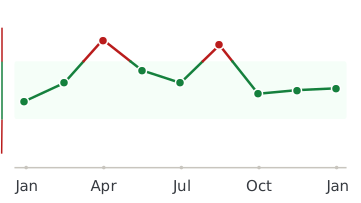
Healthmatters dashboard showing biomarker trend graph

Every lab result you’ve ever had, charted and explained.

Healthmatters is a tracker for your lab results. Upload a report from any lab, any country — every marker charted and explained.

Start with my report →
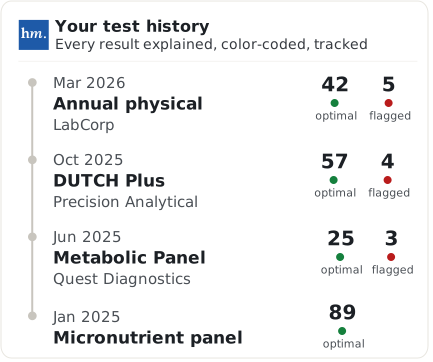
Beyond Rheumatoid Factor IgM — 10,000+ markers explained
One Rheumatoid Factor IgM result tells you where you are. Your history tells you where you’re heading. Upload your past lab reports and see this marker — and every marker on them —every marker charted against your own lab’s ranges.
Start with this report →
Healthmatters timeline preview showing biomarker trends over time
Clinical Sources & References

All our content is backed by peer-reviewed studies, academic research, and trusted medical sources. We’re committed to accuracy and transparency — see our editorial policy for details.

Article Review Log
Written by Healthmatters Editorial Team
Healthmatters Lifetime Plan

Pay $250. Track your health forever

One payment. No renewals. Yours for life.

10,000+ biomarkers explained · trends over time

See other plans →
Secure checkout via Stripe · GDPR & HIPAA
We accept results from any lab
LabCorp Quest Diagnostics Genova Diagnostics DUTCH Test Doctor's Data Vibrant America ZRT Laboratory Cyrex Labs + any other lab

What members are saying

★★★★★ 10,000+ happy members
★★★★★

"Watching my numbers move over the years — instead of forgetting last time's results — completely changed how I manage my health."

Daniel
Member since 2022
★★★★★

"Living across several countries made keeping my lab results organized a real challenge. Healthmatters brought my results from the USA, Spain, and Germany together — 20 years of history, with long-term trends instead of scattered reports."

Ben
Member since 2021 · tracks across countries
★★★★★

"Standard lab ranges are too wide for how I practice — 'normal' isn't optimal. I set my own bands, so a client sees yellow before a marker goes officially out of range. That's the conversation I want to be having."

Dr. Alexandra
Functional medicine · 6 yrs on Pro