
Reference Ranges:
Negative: Less than 0.20 OD. No significant level of IgG antibody to Schistosoma detected.
Indeterminate: 0.20 to 0.49 OD. It is recommended to repeat the assay with a paired sample after at least one month, when the results fall within this range.
Positive: Greater than or equal to 0.50 OD. Presumptive evidence of a current or past infection with Schistosoma species.
Serological results should be used as an aid in diagnosis and should not be interpreted as diagnostic by themselves.
The Schistosoma IgG Antibody marker on a panel from Labcorp is a diagnostic tool used to detect antibodies against Schistosoma, a type of parasitic worm that causes schistosomiasis. When someone is infected with Schistosoma, their immune system responds by producing specific antibodies, including IgG. The presence of Schistosoma IgG antibodies in a blood sample indicates that the person has been exposed to the parasite.
This exposure could be recent or from a past infection since IgG antibodies can remain in the bloodstream for a long time. The test does not differentiate between current or past infections but provides valuable information about exposure. This is particularly useful in diagnosing schistosomiasis, especially in individuals who have traveled to or lived in areas where the parasite is common, such as parts of Africa, South America, the Caribbean, the Middle East, and Southeast Asia.
Symptoms of schistosomiasis can include abdominal pain, diarrhea, blood in the urine or stool, and chronic infections can lead to more severe complications like liver damage, kidney failure, or bladder cancer. Therefore, a positive Schistosoma IgG Antibody test helps healthcare providers understand if schistosomiasis might be the cause of these symptoms, guiding further testing and treatment decisions.
A negative result for the Schistosoma IgG Antibody test indicates that there are no detectable IgG antibodies against Schistosoma in the person's blood. This suggests that the individual has not been exposed to the Schistosoma parasite or that any previous exposure did not lead to a significant immune response detectable by the test. It is important to note, however, that a negative result does not completely rule out the possibility of a very recent infection, as it can take several weeks for IgG antibodies to develop to detectable levels. Therefore, if there is a strong suspicion of schistosomiasis based on symptoms or exposure history, additional tests or follow-up testing might be recommended. A negative result can be reassuring for individuals who have not been in regions where Schistosoma is prevalent or who do not have symptoms consistent with schistosomiasis.
 Schistosoma IgG
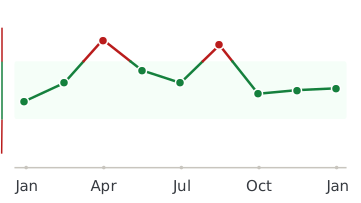
Every lab result you’ve ever had, charted and explained.
Healthmatters is a tracker for your lab results. Upload a report from any lab, any country — every marker charted and explained.
Start with my report →
All our content is backed by peer-reviewed studies, academic research, and trusted medical sources. We’re committed to accuracy and transparency — see our editorial policy for details.