
 Optimal Result:
88.9 - 117 mg/dL.
Optimal Result:
88.9 - 117 mg/dL.

Iron is required for the production of red blood cells (a process known as hematopoiesis), but it's also part of hemoglobin (that is the pigment of the red blood cells) binding to the oxygen and thus facilitating its transport from the lungs via the arteries to all cells throughout the body. Once the oxygen is delivered, the iron (as part of hemoglobin) binds the carbon dioxide which is then transported back to the lung, from where it gets exhaled. Iron is also involved in the conversion of blood sugar to energy.
The production of enzymes (which play a vital role in the production of new cells, amino acids, hormones and neurotransmitters) also depends on iron, this aspect becomes crucial during the recovery process from illnesses or following strenuous exercise.
The immune system is dependent on iron for its efficient functioning. Physical and mental growth require sufficient iron levels, particularly important in childhood and pregnancy, where the developing baby solely depends on its mother's iron supplies.
Lab Results Explained and Tracked
What does it mean if your Iron (RBC) result is too high?
Iron levels are typically evaluated in conjucntion with other iron tests or a full anemia panel. High levels of serum iron can occur as the result of multiple blood transfusions, excessive iron supplementation or injections, lead poisoning, liver or kidney disease. Elevated iron levels can also be due to the genetic disease hemochomatosis-when too much iron accumulates in the body and can damage organs.
High iron levels from dietary or supplementation are more likely in men, and women after menopause because they do not lose iron in blood.

All Your Lab Results.
One Simple Dashboard.
Import, Track, and Share Your Lab Results Easily
Import, Track, and Share Your Lab Results
Import lab results from multiple providers, track changes over time, customize your reference ranges, and get clear explanations for each result. Everything is stored securely, exportable in one organized file, and shareable with your doctor—or anyone you choose.
Cancel or upgrade anytime

What does it mean if your Iron (RBC) result is too low?
Iron is lost by the body through a variety of ways including urination, defecation, sweating, and exfoliating of old skin cells. Bleeding contributes to further loss of iron which is why women have a higher demand for iron than men. If iron stores are low, normal hemoglobin production slows down, which means the transport of oxygen is diminished, resulting in symptoms such as fatigue, dizziness, lowered immunity or reduced ability for athletes to keep up with their training programs. Since our bodies can’t produce iron itself, we need to make sure we consume sufficient amounts of iron as part of our daily diet.
Mild iron deficiency can be prevented or corrected by eating iron-rich foods and by cooking in an iron skillet. Because iron is a requirement for most plants and animals, a wide range of foods provide iron. Good sources of dietary iron have heme-iron as this is most easily absorbed and is not inhibited by medication or other dietary components. Two examples are red meat, and poultry.
Non-heme sources do contain iron, though it has reduced bioavailability. Examples are lentils, beans, leafy vegetables, pistachios, tofu, fortified bread, and fortified breakfast cereals. Iron from different foods is absorbed and processed differently by the body; for instance, iron in meat (heme iron source) is more easily absorbed than iron in grains and vegetables (non-heme iron source) but heme/hemoglobin from red meat has effects which may increase the likelihood of colorectal cancer. Minerals and chemicals in one type of food may also inhibit absorption of iron from another type of food eaten at the same time. For example, oxalates and phytic acid form insoluble complexes which bind iron in the gut before it can be absorbed.
Because iron from plant sources is less easily absorbed than the heme bound iron of animal sources, vegetarians and vegans should have a somewhat higher total daily iron intake than those who eat meat, fish or poultry. Legumes and dark-green leafy vegetables like broccoli, kale and oriental greens are especially good sources of iron for vegetarians and vegans. However, spinach and Swiss chard contain oxalates which bind iron making it almost entirely unavailable for absorption. Iron from nonheme sources is more readily absorbed if consumed with foods that contain either heme- bound iron or vitamin C.
Symptoms of iron deficiency can occur even before the condition has progressed to iron deficiency anemia. Symptoms of iron deficiency are not unique to iron deficiency.
Iron is needed for many enzymes to function normally, so a wide range of symptoms may eventually emerge, either as the secondary result of the anemia, or as other primary results of iron deficiency. Symptoms of iron deficiency include: fatigue, dizziness, pallor, hair loss, twitches, irritability, weakness, pica, brittle or grooved nails.
Frequently used forms of iron in supplements include ferrous and ferric iron salts, such as ferrous sulfate, ferrous gluconate, ferric citrate, and ferric sulfate. Because of its higher solubility, ferrous iron in dietary supplements is more bioavailable than ferric iron. High doses of supplemental iron (45 mg/day or more) may cause gastrointestinal side effects, such as nausea and constipation. Other forms of supplemental iron, such as heme iron polypeptides, carbonyl iron, iron amino-acid chelates, and polysaccharide-iron complexes, might have fewer gastrointestinal side effects than ferrous or ferric salts. Many medicinal herbs can offer iron boosting properties to those who suffer from iron deficiency. These medicinal properties can easily be assimilated into the bloodstream as a hot water infusion (tea). Iron enhancing herbs include yellow dock, red raspberry leaf, gentian, yellow root, turmeric, mullein, nettle, parsley, ginseng, watercress, and dandelion.
Article Review & Sources
All our content is backed by peer-reviewed studies, academic research, and trusted medical sources. We're committed to accuracy and transparency — see our editorial policy for details.
Laboratories
Bring All Your Lab Results Together — In One Place
We accept reports from any lab, so you can easily collect and organize all your health information in one secure spot.









Pricing Table
Gather Your Lab History — and Finally Make Sense of It
Finally, Your Lab Results Organized and Clear

Personal plans

$79/ year
Advanced Plan
Access your lab reports, explanations, and tracking tools.
- Import lab results from any provider
- Track all results with visual tools
- Customize your reference ranges
- Export your full lab history anytime
- Share results securely with anyone
- Receive 5 reports entered for you
- Cancel or upgrade anytime
$250/ once
Unlimited Account
Pay once, access everything—no monthly fees, no limits.
- Import lab results from any provider
- Track all results with visual tools
- Customize your reference ranges
- Export your full lab history anytime
- Share results securely with anyone
- Receive 10 reports entered for you
- No subscriptions. No extra fees.
$45/ month
Pro Monthly
Designed for professionals managing their clients' lab reports
- Import lab results from any provider
- Track lab results for multiple clients
- Customize reference ranges per client
- Export lab histories and reports
- Begin with first report entered by us
- Cancel or upgrade anytime
About membership
What's included in a Healthmatters membership
 Import Lab Results from Any Source
 See Your Health Timeline
 Understand What Your Results Mean

 Visualize Your Results

 Data Entry Service for Your Reports
 Securely Share With Anyone You Trust
Let Your Lab Results Tell the Full Story
Once your results are in one place, see the bigger picture — track trends over time, compare data side by side, export your full history, and share securely with anyone you trust.


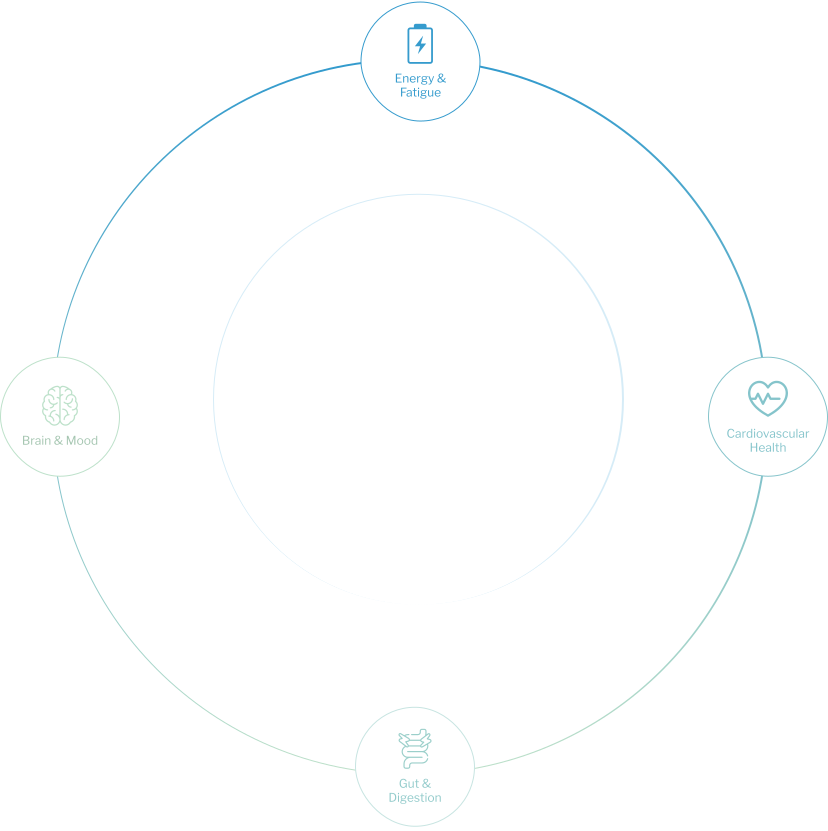
Bring all your results together to compare, track progress, export your history, and share securely.
What Healthmatters Members Are Saying

I have been using Healthmatters.io since 2021. I travel all over the world and use different doctors and health facilities. This site has allowed me to consolidate all my various test results over 14 years in one place. And every doctor that I show this to has been impressed. Because with any health professional I talk to, I can pull up historical results in seconds. It is invaluable. Even going back to the same doctor, they usually do not have the historical results from their facility in a graph format. That has been very helpful.
Anthony
Unlimited Plan Member since 2021
What fantastic service and great, easy-to-follow layouts! I love your website; it makes it so helpful to see patterns in my health data. It's truly a pleasure to use. I only wish the NHS was as organized and quick as Healthmatters.io. You've set a new standard for health tracking!
Karin
Advanced Plan Member since 2020
As a PRO member and medical practitioner, Healthmatters.io has been an invaluable tool for tracking my clients' data. The layout is intuitive, making it easy to monitor trends and spot patterns over time. The ability to customize reports and charts helps me present information clearly to my clients, improving communication and outcomes. It's streamlined my workflow, saving me time and providing insights at a glance. Highly recommended for any practitioner looking for a comprehensive and user-friendly solution to track patient labs!
Paul
Healthmatters Pro Member since 2024

We implement proven measures to keep your data safe.
At HealthMatters, we're committed to maintaining the security and confidentiality of your personal information. We've put industry-leading security standards in place to help protect against the loss, misuse, or alteration of the information under our control. We use procedural, physical, and electronic security methods designed to prevent unauthorized people from getting access to this information. Our internal code of conduct adds additional privacy protection. All data is backed up multiple times a day and encrypted using SSL certificates. See our Privacy Policy for more details.